
Sitemap
A list of all the posts and pages found on the site. For you robots out there, there is an XML version available for digesting as well.
Pages
Posts
Slope Stability Analysis of Earth and Rock-Fill Dams
Published:
A technical guide to static and rapid-drawdown stability, shear-strength selection, pore pressures, critical surfaces, and interpretation of factors of safety.
Settlement and Deformation Analysis of Embankment Dams
Published:
How to assess construction settlement, primary consolidation, secondary compression, differential deformation, cracking risk, and freeboard implications.
Seismic Design Considerations for Embankment Dams
Published:
Key seismic hazards and analysis decisions including liquefaction screening, dynamic response, post-earthquake stability, deformation, and freeboard.
Seepage Analysis and Control in Embankment Dams
Published:
How to develop a defensible seepage-control system using zoning, filters, drains, cutoff measures, hydraulic gradients, and monitoring.
Instrumentation and Performance Monitoring of Embankment Dams
Published:
How to develop an instrumentation and monitoring system that connects measured pore pressure, deformation, seepage, and seismic response to engineering decisions.
Geotechnical Site Investigation for Embankment Dam Projects
Published:
A structured investigation program for foundation characterization, borrow materials, abutments, permeability, weak layers, and geotechnical design parameters.
Filter and Drain Design for Embankment Dams
Published:
Engineering principles for selecting and arranging filters, transitions, chimney drains, toe drains, and drainage blankets.
Failure Modes and Risk-Based Assessment of Embankment Dams
Published:
A failure-mode-based approach to identifying credible hazards, controls, monitoring indicators, and risk-reduction priorities for embankment dams.
Embankment Dam Engineering: A Practical Framework for Safe Design
Published:
A practical engineering framework covering site investigation, zoning, seepage, stability, settlement, seismic loading, construction control, and instrumentation for embankment dams.
Construction Control and Quality Assurance for Earth Dams
Published:
A field-oriented QA/QC framework for material processing, lift placement, compaction, moisture conditioning, testing, and as-built verification.
Deep Foundations and Pile Design
Published:
Principles of deep foundation design, focusing on driven piles and drilled shafts, including capacity estimation, load testing, and construction considerations.
Geosynthetics in Geotechnical Engineering
Published:
An introduction to geosynthetic materials and their wide-ranging applications in reinforcement, separation, filtration, drainage, and containment.
Earthquake Geotechnical Engineering
Published:
Key concepts in earthquake geotechnical engineering, including seismic site response, soil liquefaction, and seismic design of foundations and slopes.
Soil Improvement and Ground Modification Techniques
Published:
An overview of common soil improvement methods used to enhance the engineering properties of weak or problematic soils.
Geotechnical Site Investigation Methods
Published:
A practical overview of geotechnical site investigation techniques, from desk studies and borings to advanced in-situ testing and geophysical methods.
Retaining Walls and Lateral Earth Pressure
Published:
Theory and design principles for retaining walls, including Rankine and Coulomb earth pressure theories and modern reinforced soil systems.
Slope Stability Analysis in Geotechnical Engineering
Published:
Methods for analyzing the stability of natural and engineered slopes, including limit equilibrium approaches and modern numerical techniques.
Foundation Engineering Principles
Published:
Key principles of foundation engineering, covering bearing capacity, settlement analysis, and the selection of shallow versus deep foundation systems.
Fundamentals of Soil Mechanics
Published:
An overview of the core principles of soil mechanics, including phase relationships, effective stress, shear strength, and consolidation theory.
Introduction to Geotechnical Engineering
Published:
A comprehensive introduction to geotechnical engineering — the branch of civil engineering that deals with the behavior of earth materials and their application in design and construction.
portfolio
Construction Materials Testing Equipments
Development and application of testing equipment and methods for concrete, soil, aggregates, asphalt, and other construction materials.
Softwares
Engineering softwares
Dam Engineering
Work and publications related to cemented material dams, embankment dams, upstream sealing systems, low-modulus foundations, and long-term dam behavior.
Geosynthetics
Research and engineering work related to slope and channel erosion control using geosynthetic solutions such as geocells.
Geotechnical Instrumentation
Application and interpretation of instrumentation data for engineering structures, including comparison of numerical predictions with measured field behavior.
Geotechnical Laboratory Research
Experimental investigation of soil and plastic-concrete behavior, including small-strain dynamic properties and critical hydraulic-gradient studies.
publications
Stability analysis of left abutment of Latian dam by calculation of reliability coefficient using Monte Carlo method
Published in , 2010
Recommended citation: fadaei, mansour; ,Stability analysis of left abutment of Latian dam by calculation of reliability coefficient using Monte Carlo method,4th International Conference on Geotechnical Engineering and Soil Mechanics,2010
Download Paper
Studies on Water Pressure Changes in Different Parts Kinevars Dam During Construction and First Impounding
Published in , 2011
Kinevars Dam is located in Zanjan province, 14 km southwest of Abhar city and about 5 km from Kinevars village. In general, the purpose of constructing the dam is to supply drinking water in Abhar and Khorramdareh cities to supply 1568 hectares of agricultural lands between the dam and the cities of Abhar and Khorramdareh. The dam type is of embankment with clay core. The construction of the body has been completed and it is currently under operation. In order to study the behavior of the dam body and the foundation in different conditions, the first impounding and long-term operation, the instrumentation system has been designed and implemented. In this paper, the results pore water pressure during construction and impounding of various parts of the dam body and foundation are presented and evaluated. The results can be used in future designs.
Recommended citation: fadaei, mansour; ,Studies on Water Pressure Changes in Different Parts Kinevars Dam During Construction and First Impounding,6th National Congress on Civil Engineering,2011
Download Paper
Application of piezoelectric in seismic geotechnical engineering and measurement of compressive wave velocity using piezoelectric
Published in , 2011
Piezoceramic material has been used in engineering measurement and control. When used in geotechnical testing, the material can work as a wave transmitter or a wave receiver. Among the piezoelectric sensors , the bender element and the bending disk are used for testing. While the bender element is used to generate and receive shear waves, the bending disk is used to produce and detect P-waves. Though, several researchers have successfully employed these tests for characterizing the soil mass based on the shear wave velocities, determination of the ‘‘time lag’’ between the input and output waves remains debatable. Even, the existing literature does not clearly present the problem with respect to the frequency of excitation, detection of first arrival, the wave shape and near field effects. With this in view, this investigation was made to capture the performance of piezoceramic elements. Details of the methodology are presented in this paper and special attention has been paid to address various problems (i.e., wave attenuation, frequency of excitation, detection of first arrival, the wave shape and near field effects) that are associated with signal interpretation. The cross correlation is a procedure which resolves uncertainties in travel time. Near field effects, wave attenuation and frequency of excitation can be effectively taken into consideration by matching the measured signal with the analytical solution. It is recommended to use sinusoidal wave shapes since compression wave velocity obtained by means of square wave was usually greater than ones result of sinusoidal waves.
Recommended citation: Jafarzadeh, Fardin; Fadaei, Mansour; ,Application of piezoelectric in seismic geotechnical engineering and measurement of compressive wave velocity using piezoelectric,6th International Conference on Seismology and Earthquake Engineering,2011
Download Paper
Measurement of compressive and shear velocity using Bender Element & Piezoelectric Disc
Published in , 2011
Maximum shear and compression moduli are of soil and other continuum materials (such as plastic concrete) dynamic parameters. These parameters are used to forecast the behavior of soil and soil-structure under dynamic loading. Also to study the large strain behavior, they are the non-linear parameters of soils. Shear and compression modulus are correlated with some soil properties such as liquefaction potential and degree of saturation. These moduli can be measured in laboratory and also in field. According to the fast and low cost in-situ measurement of these parameters in comparison with other soil properties, they can be used for microzonation purposes. Furthermore, maximum shear and compression moduli can be measured using bender element and piezoelectric disks in laboratory very fast with low costs. The aforementioned instruments can be adjoined with most of conventional soil laboratory apparatuses. In this paper the method of performing, assembling and result analysis techniques for bender element and piezoelectric disks are introduced which is followed by presenting the results of the assessments of the maximum shear modulus of a sandy soil and maximum compression modulus of a plastic concrete sample.
Recommended citation: fadaei, mansour; ,Measurement of compressive and shear velocity using Bender Element & Piezoelectric Disc,first international conference of urban construction in the vicinity of active faults,2011
Download Paper
Control of erosion at slopes of Tang-e-Hammam channels using Geocell
Published in , 2016
Surface erosion of the slopes of the conveying canal’s of Tang-e-Hamam Dam due to rains in the region can cause problems for the operation of this canal. These slopes are about 45 degrees and the material is young and similar to alluvial conglomerates. In order to control the erosion of these slopes, various options were evaluated, and finally, the use of geocells was selected as the preferred economic and technical option and is being implemented. The advantages of Geocell include usability in steep slopes, good durability and ease of execution. In this article, we will first briefly introduce the geocell and its advantages over other options. Then, its design method for trenches channel of Tang-e-Hamam Dam is presented and at the end, its implementation method is presented. In simlilar slope, this experiences can be used. … Read more
Recommended citation: fadaei, mansour; ,Control of erosion at slopes of Tang-e-Hammam channels using Geocell,5th International Conference on Geotechnical Engineering and Soil Mechanics,2016
Download Paper
CMDs on low modulus foundations
Published in , 2017
Cemented Material Dams (CMDs) are a new generation of gravity dams that allows construction of Concrete dam bodies on almost every rock foundation even on very low modulus and weak rocks. Due to the weakness of the rock, more consideration is needed for a successful design. Four FSHDs (a main branch of CMDs) have been designed and now they are under construction in IRAN. All of mentioned dams are constructed on weak and very low modulus foundations. One of them (Dasht-e-Palang) is a combination of Earthfill and FSHD dam. In all these cases, For reducing tensile stresses in the dam body, Restricting dam body elasticity modulus by special consideration in mix design and source of aggregates is necessary. Watertightness of the dam has been provided by a combination of exposed PVC geomembrane and covered PVC. PVC has been used to have the ability of tolerating large deformations especially along the axis of dam. In Dasht-e-Palang dam, advantageous of symmetrical Hardfill body allows us to design a well contact between rigid body (FSHD) and Embankment. In this paper investigations of basic design and back analysis of instrumentations of these CMDs on weak rocks are presented.
Recommended citation: fadaei, mansour; ,"CMDs on low modulus foundations, Four first experiences in Iran",85th Annual Meeting of ICOLD,2017
Download Paper
Upstream face of CMDs
Published in , 2017
Cemented Material Dams (CMDs) are a new generation of gravity dams that allows construction of a rigid dam body on almost every rock foundation. Four FSHDs (a main branch of CMDs) have been designed and now they are under construction in IRAN. Upstream face of FSHDs is a key element in designing of such dams. Three practical ways to construct this element are: (1) reinforced concrete like concrete face rockfill dams, (2) exposed PVC Geomembrane after completion of dam body and (3) covered PVC Geomembrane constructed simultaneously with body. The first method is widely used but has some disadvantageous in construction because it needs more time to complete. The second method is not applicable when protection of PVC is necessary. The third method is also a classic method used all over the world but for some foundations and heights they will have some large deformations and will not work well especially under construction. In this paper advantages and disadvantageous of all these method is stated and a new combination method that is under construction is introduced.
Recommended citation: fadaei, mansour; ,Upstream face of CMDs (Case Study: first CMDs in IRAN),85th Annual Meeting of ICOLD,2017
Download Paper
Long-term behavior of Kinevars Embankment Dam
Published in , 2017
During the construction and operation of an embankment dam, various parameters, such as total stress, settlement, and most importantly pore pressure in the core affect the dam stability. To study these parameters, numerical modeling of dam behavior in drained or undrained loading and unloading is essential. In this study, the result of instruments in the construction and operation of the Kinevars dam, which include the actual values of stress and settlement is compared with the values obtained from the analysis of stress-settlement achieved from numerical modeling. According to the results, it was found that Geostudio software and Duncan nonlinear elastic model are suitable for analyzing the behavior of an embankment dam. Additionally, our results revealed that the use of simplified common methods for stress-settlement-leakage modeling in dams is reliable. Also, in the construction filling time, the results of numerical modeling and instrumentation for the parameters of pore water pressure and total stress in core are close. Considering the results of this study, it was concluded that the behavior of an embankment dam during construction and operation with acceptable accuracy is predictable by using Geostudio software.
Recommended citation: Ghezelayagh, Ahmad; Fadaei, Mansour; Bolouri, Amin; ,Long-term behavior of Kinevars embankment dam using numerical model and compare it with the Instrumentation results,4th International Conference on Long-Term Behavior and Environmentally Friendly Rehabilitation Technologies of Dams (LTBD 2017),2017
Download Paper
Guide to the interpretation and application of the ISO90012015 standard for the consulting engineering industry (Persian Translation)
Published in , 2018
The International Federation of Consulting Engineers (FIDIC) has published a guide on the interpretation and application of the ISO 9001:2015 standard for the consulting engineering industry, aiming to provide appropriate recommendations regarding the implementation of ISO 9001:2015 requirements within a quality management system. This guide seeks to assist consulting engineering firms in selecting and determining the best approach to applying the standard within their quality management systems.
Recommended citation: fadaei, mansour; ,Guide to the interpretation and application of the ISO9001:2015 standard for the consulting engineering industry (Persian Translation),2018
Download Paper
ISO 90012015 Interpretation and Application Guide 1st edition 2017 (Persian Translation)
Published in , 2019
ISO 9004:2018 gives guidelines for enhancing an organization’s ability to achieve sustained success. This guidance is consistent with the quality management principles given in ISO 9000:2015. ISO 9004:2018 provides a self-assessment tool to review the extent to which the organization has adopted the concepts in this document. ISO 9004:2018 is applicable to any organization, regardless of its size, type and activity.
Recommended citation: fadaei, mansour; ,ISO 9001:2015 Interpretation and Application Guide 1st edition 2017 (Persian Translation),2019
Download Paper
Combined method of sealing face in FSHD dams
Published in , 2020
In recent years, a new generation of gravity dams called CMD (cemented matrial dams) has emerged in the world, including FSHD dams. These dams have major advantages such as the possibility of building a gravity dam on weak foundations, higher safety, better seismic behavior and faster implementation and environmentally compatible than other types of dams. One of the key elements of this type of dam is the sealing process, and its common method is to implement a reinforced concrete face similar to CFRD dams. Implementation of the integrated face after the completion of the construction of the dam, in addition to the difficulty and increase of the execution time, makes it impossible to operation the dam step by step. Another solution is to use the Winchester panel method, which may not be useful in weak foundations due to the large deformations of the body and foundation. Kahir Dam, the first FSHD is under construction and the dashtepalang dam, is one of the largest combined dams in Iran, with a height of more than 50 meters and a very weak rock foundation. For both dams, concrete surface and the sealing panel option were not used for the above reasons. Therefore, in this paper, new methods for the possibility of replacing the concrete face with the combined geomemberin face have been investigated. The results of numerical modeling in this study showed that it is more appropriate in weak foundation so that in cases where it is not possible to use the integrated face after construction, the sealing face should be implemented in combination.
Recommended citation: fadaei, mansour; ,Combined method of sealing face in FSHD dams (Case study in Kahir and dashtepalang dams),4th Dams and Tunnels Conference,2020
Download Paper
talks
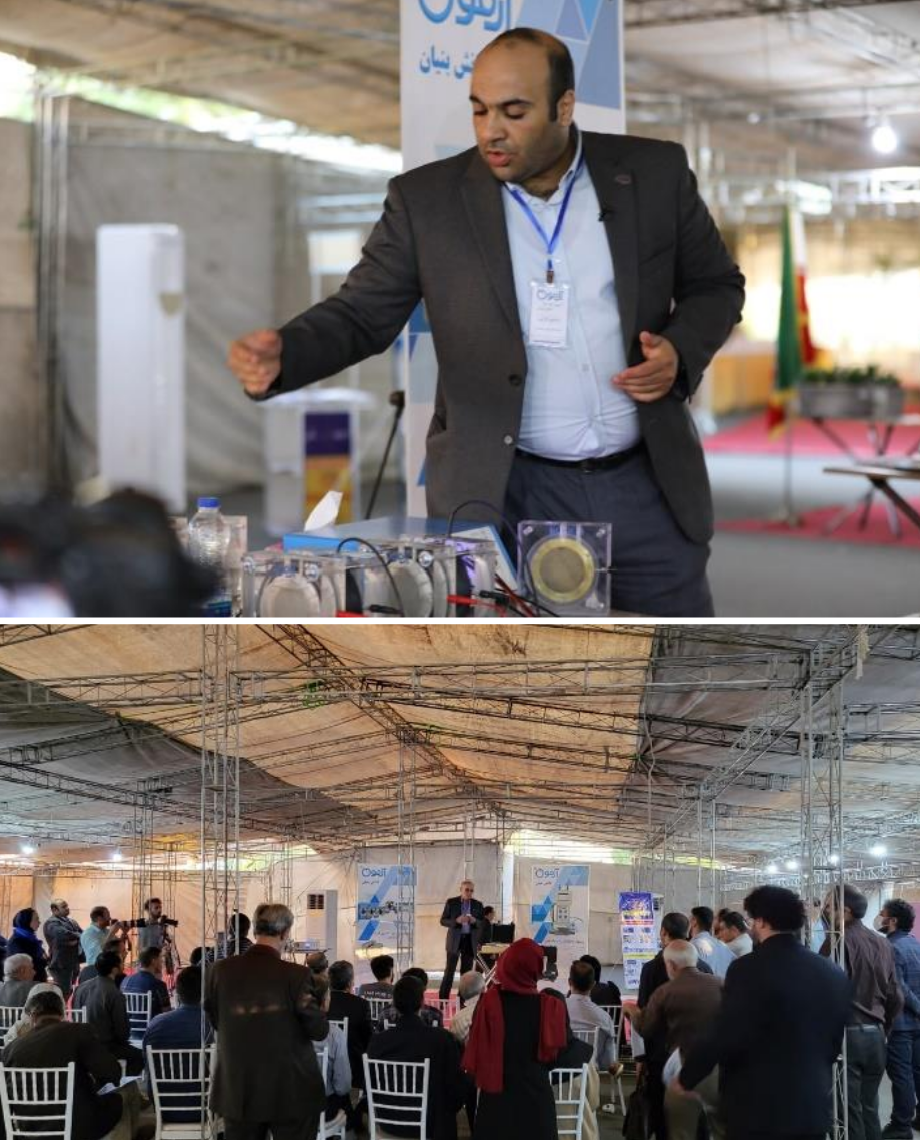
concrete curing
Published:
NDE of concrete Structures
Published:
UPV testing of concrete
Published:
teaching
Teaching experience 1
Undergraduate course, University 1, Department, 2014
This is a description of a teaching experience. You can use markdown like any other post.
Teaching experience 2
Workshop, University 1, Department, 2015
This is a description of a teaching experience. You can use markdown like any other post.